
WETLANDS: ECOSYSTEMS OF EXTRAORDINARY VALUE
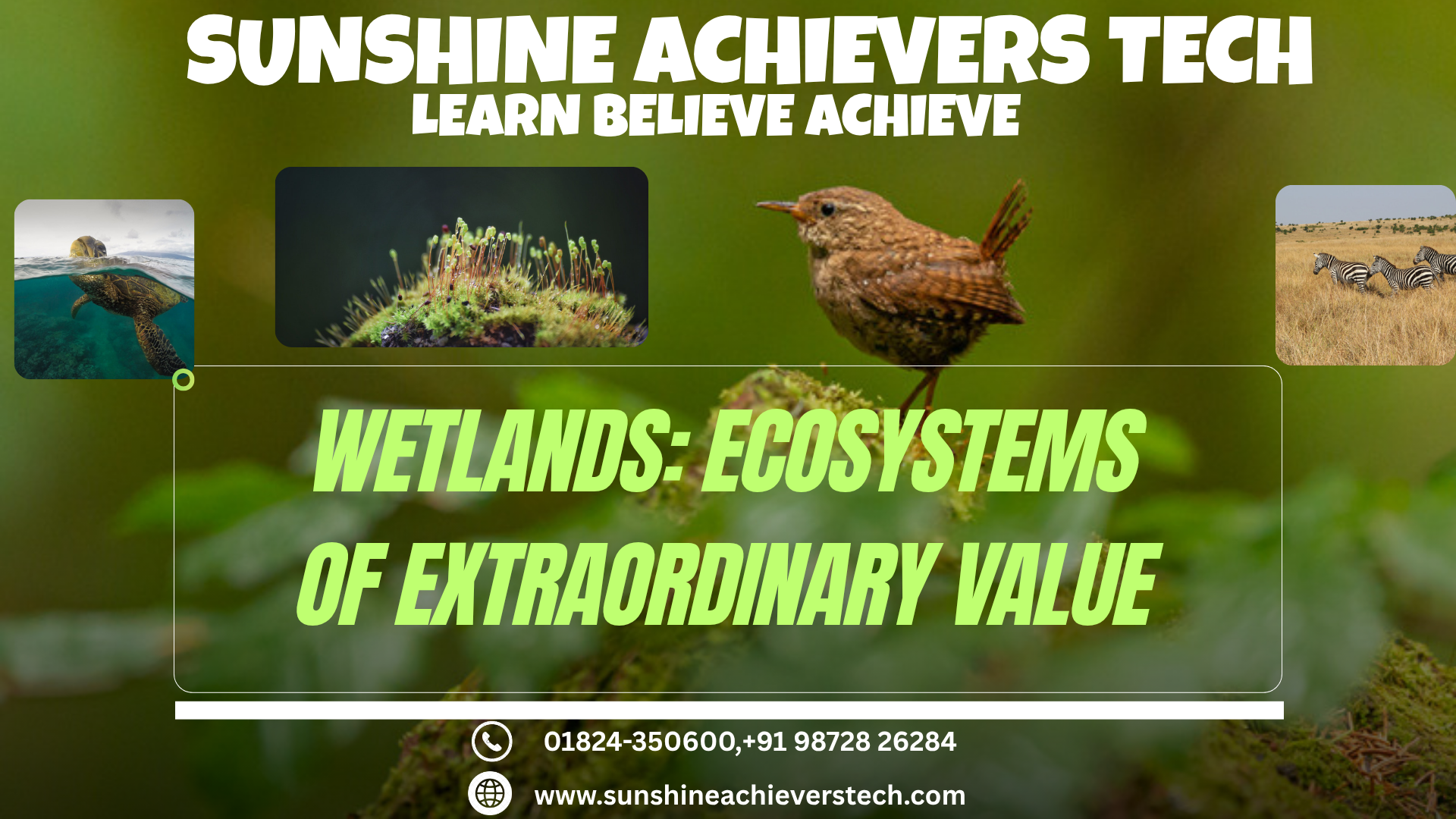
Wetlands are areas where water covers the soil permanently or seasonally, creating conditions that support specialised plants and animals. They include marshes, swamps, peatlands, mangrove forests and shallow lakes. Although wetlands occupy only a relatively small proportion of the Earth's surface, they provide ecological services that are essential for both natural ecosystems and human societies.
One of the most important functions of wetlands is their ability to regulate water movement. During periods of heavy rainfall, wetlands can temporarily store large volumes of water, reducing the speed at which floodwater reaches downstream areas. During drier periods, many wetlands gradually release stored water, helping to maintain river flows and groundwater supplies. However, scientists note that the effectiveness of this process depends on the size, condition and location of individual wetlands.
Wetlands also support exceptionally rich biodiversity. Numerous species of fish, amphibians, birds, mammals and insects depend on these habitats for feeding, breeding or migration. Some migratory birds rely on chains of wetlands located thousands of kilometres apart during their annual journeys. The disappearance of a single wetland may therefore affect wildlife populations far beyond the immediate area.
Researchers have become increasingly interested in the role of wetlands in regulating the global climate. Peatlands, for example, store large quantities of organic carbon accumulated over thousands of years. If these wetlands are drained or damaged, some of this stored carbon may be released into the atmosphere. Nevertheless, scientists continue to investigate the rates at which different wetland types store and release carbon under changing environmental conditions.
Human activities have resulted in the loss or degradation of many wetlands through drainage, urban expansion, agriculture and infrastructure development. In response, governments and conservation organisations have established protected areas, restored damaged wetlands and introduced regulations to reduce further losses. Scientists generally agree that conservation efforts are most effective when combined with sustainable land management and community participation.
Despite considerable progress in wetland research, many ecological processes remain incompletely understood. Researchers continue to investigate species interactions, nutrient cycling and the long-term impacts of climate change on wetland ecosystems.
Questions 1–12
Do the following statements agree with the information given in the passage?
Write
TRUE
FALSE
NOT GIVEN
1. Wetlands can help reduce flooding by storing water during periods of heavy rainfall.
2. Mangrove forests store more carbon than peatlands.
3. Every wetland provides the same level of flood protection.
4. Some migratory birds depend on a series of wetlands during migration.
5. Scientists estimate that over half of the world's wetlands have disappeared.
6. Researchers fully understand how all wetlands respond to climate change.
7. Draining wetlands may result in carbon being released into the atmosphere.
8. Wetlands in tropical regions recover faster than wetlands in temperate regions.
9. Protected areas alone are considered sufficient for wetland conservation.
10. Scientists believe community participation can improve conservation efforts.
11. The Ramsar Convention has been adopted by every country with wetlands.
12. Scientists have completed their research into nutrient cycling within wetlands.
Summary
This IELTS reading passage explores the ecological importance of wetlands, one of the world's most valuable ecosystems. It explains how wetlands regulate water flow, reduce flood risks, support diverse wildlife, and store significant amounts of carbon. The passage also discusses the threats posed by drainage, agriculture, urbanisation, and infrastructure development, along with conservation strategies such as wetland restoration, protected areas, sustainable land management, and community participation. Twelve True, False, and Not Given questions are included to help learners strengthen their IELTS reading comprehension, vocabulary, and critical thinking skills.